Cultural Exchange and Dialogue in China (Hangzhou)
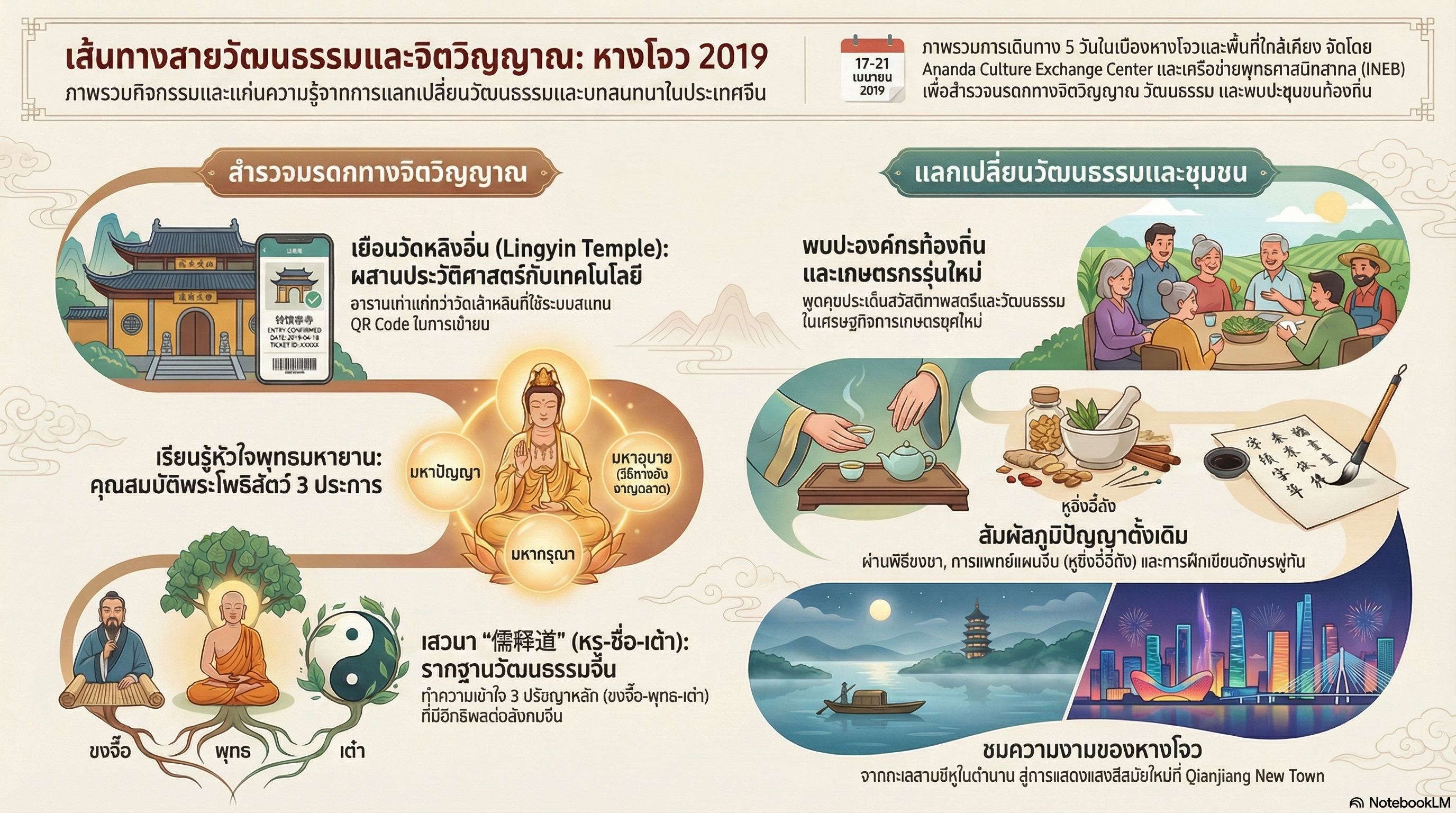
The "Cultural Exchange and Dialogue in China" program,
held from April 17-21, 2019,primarily centered in Hangzhou,
provided an immersive exploration of China’s spiritual, historical, and social landscapes.
Hangzhou is celebrated in ancient proverbs as an earthly paradise, and the itinerary lived up to this reputation by blending ancient wisdom with modern social engagement. Participants engaged in diverse activities, ranging from visiting the Ananda Culture Exchange Center and studying Confucianism, Buddhism, and Taoism (Zhouyi) to meeting with local NGOs to discuss the current status of women’s public welfare organizations.
A focal point of the journey was the Lingyin Temple and the Feilai Feng carvings. This site exemplifies the integration of tradition and technology, where historical Buddhist carvings are accessed via modern QR code entry systems. The program highlighted the resilience of spiritual institutions, such as the nunnery at Lingyin, which predates the Shaolin Temple and was restored by dedicated nuns to become a center for education. Today, it houses approximately 60 nuns, about 20 of whom are students. Notably, the dialogue emphasized international Buddhist connections, featuring a teacher who graduated from Thailand's Mahachulalongkornrajavidyalaya University.
The spiritual insights gained focused heavily on Mahayana Buddhist philosophy, specifically the Six Paramitas (Generosity, Morality, Patience, Energy, Meditation, and Wisdom). These virtues are practiced to counteract the "three poisons" of greed, hatred, and delusion. Furthermore, the concept of a Bodhisattva—defined by Great Wisdom (Maha-prajna), Great Compassion (Maha-karuna), and Great Skillful Means (Maha-upaya)—serves as the core of the Mahayana tradition. This "Mahayana for the Masses" approach prioritizes benefiting others and guiding them toward truth.
Beyond religion, the program explored the "New Agricultural Economy" through meetings with young farmers at eco-farms in Longmen Town. This illustrates how traditional cultural values are being adapted to drive sustainable economic growth in rural China.
Analogy: This cultural journey acts as a bridge between two shores; one shore is rooted in the deep soil of ancient tradition and philosophy, while the other reaches toward a high-tech, socially engaged future, with the dialogue itself serving as the sturdy planks connecting them.
...........
2019年4月17日至21日举行的**“中国文化交流与对话”计划,主要在杭州展开,
旨在对中国的精神、历史和社会景观进行沉浸式探索。杭州在古代谚语中被誉为“人间天堂”,此次行程通过融合古代智慧与现代社会参与**,充分印证了这一美誉。参与者开展了多样化的活动,从参观阿南达文化交流中心、研习儒释道(周易),到与当地非政府组织(NGO)会谈,探讨中国女性公益团体的现状。
此次行程的重点之一是灵隐寺和飞来峰石刻。该遗址体现了传统与技术的融合,历史悠久的佛教石刻现在通过现代化的二维码(QR code)扫描系统即可进入参观。该计划还强调了精神机构的韧性,例如灵隐寺内的尼庵,其历史甚至早于少林寺,经由充满信仰的尼僧修复后,现已成为教育中心。目前,这里约有60位尼僧,其中约20位是学生。值得注意的是,对话中还提到了国际佛教联系,其中一位导师毕业于泰国的摩诃朱拉隆功大学。
在精神见解方面,重点探讨了大乘佛教哲学,特别是六波罗蜜(布施、持戒、忍辱、精进、禅定、智慧)。修行这些美德是为了对抗贪、嗔、痴“三毒”。此外,菩萨的概念——以大般若(伟大的智慧)、大慈悲(伟大的慈悲)和大方便(伟大的巧妙手段)为特征——构成了大乘传统的核心。这种“面向大众的大乘”路径优先考虑利益他人,并引导众生走向真理。
除了宗教维度,该计划还通过在龙门镇与“新农人”的交流,探索了**“新农业经济”**。这展示了传统文化价值观如何被重新诠释,以推动中国农村的可持续经济增长。
类比: 这次文化之旅就像是连接两岸的一座桥梁;一岸深深植根于古代传统与哲学的土壤中,另一岸则伸向高科技且积极参与社会的未来,而对话本身就是连接这两端的坚实桥板。
...........
โครงการ "การแลกเปลี่ยนและเสวนากลางวัฒนธรรมในจีน"
ซึ่งจัดขึ้นระหว่างวันที่ 17-21 เมษายน 2562 โดยเน้นพื้นที่ในเมือง หางโจว เป็นหลัก
ได้มอบประสบการณ์การสำรวจเชิงลึกในด้านจิตวิญญาณ ประวัติศาสตร์ และสังคมของจีน
หางโจวได้รับการยกย่องในสุภาษิตโบราณว่าเป็นสรวงสวรรค์บนดิน และกำหนดการเดินทางครั้งนี้ก็ได้สะท้อนถึงคำกล่าวนั้นผ่านการผสมผสาน ภูมิปัญญาโบราณเข้ากับการมีส่วนร่วมทางสังคมสมัยใหม่ ผู้เข้าร่วมได้ทำกิจกรรมที่หลากหลาย ตั้งแต่การเยี่ยมชม ศูนย์แลกเปลี่ยนวัฒนธรรมอานันดา และการศึกษาเรื่อง ขงจื๊อ พุทธ และเต๋า (โจวอี้) ไปจนถึงการประชุมร่วมกับองค์กรพัฒนาเอกชน (NGO) ท้องถิ่นเพื่อหารือเกี่ยวกับ สถานภาพขององค์กรสวัสดิการสาธารณะสำหรับสตรี
จุดเน้นสำคัญของการเดินทางครั้งนี้คือ วัดหลิงอิ่น และรอยแกะสลักที่ เฟยไหลเฟิง สถานที่แห่งนี้เป็นตัวอย่างของการบูรณาการระหว่าง ประเพณีและเทคโนโลยี ซึ่งรอยแกะสลักทางพุทธศาสนาที่มีคุณค่าทางประวัติศาสตร์สามารถเข้าถึงได้ผ่านระบบ QR code ที่ทันสมัย นอกจากนี้ โครงการยังได้ชี้ให้เห็นถึงความยืดหยุ่นของสถาบันทางจิตวิญญาณ เช่น อารามภิกษุณีในวัดหลิงอิ่น ซึ่งมีประวัติเก่าแก่กว่าวัดเส้าหลิน และได้รับการบูรณะโดยคณะภิกษุณีผู้มีศรัทธาจนกลายเป็นศูนย์กลางการเรียนรู้ ปัจจุบันมีภิกษุณีพำนักอยู่ประมาณ 60 รูป ซึ่งในจำนวนนี้ประมาณ 20 รูปเป็นนักศึกษา ที่น่าสนใจคือ มีการเชื่อมโยง สายสัมพันธ์พุทธศาสนาระดับนานาชาติ ผ่านอาจารย์ผู้สอนที่สำเร็จการศึกษาจาก มหาวิทยาลัยมหาจุฬาลงกรณราชวิทยาลัย ของประเทศไทย
ข้อมูลเชิงลึกทางจิตวิญญาณที่ได้รับเน้นหนักไปที่ ปรัชญาพุทธศาสนามหายาน โดยเฉพาะเรื่อง บารมี 6 (ทาน, ศีล, ขันติ, วิริยะ, ฌาน และปัญญา) บารมีเหล่านี้ถูกนำมาปฏิบัติเพื่อเอาชนะ "อกุศลมูล 3" คือ โลภะ โทสะ และโมหะ นอกจากนี้ แนวคิดเรื่อง พระโพธิสัตว์ ซึ่งนิยามด้วย มหาปรัชญา, มหากรุณา และ มหาอุบาย (วิธีการที่ชาญฉลาด) ถือเป็นหัวใจสำคัญของธรรมเนียมมหายาน แนวทาง "มหายานสำหรับมหาชน" นี้ให้ความสำคัญกับการบำเพ็ญประโยชน์เพื่อผู้อื่นและชี้แนะแนวทางสู่สัจธรรม
นอกเหนือจากมิติทางศาสนา โครงการยังได้สำรวจ "เศรษฐกิจเกษตรใหม่" ผ่านการพูดคุยกับเกษตรกรรุ่นใหม่ที่ฟาร์มเชิงนิเวศใน เมืองหลงเหมิน สิ่งนี้แสดงให้เห็นว่าค่านิยมทางวัฒนธรรมดั้งเดิมถูกนำมาปรับใช้เพื่อขับเคลื่อนการเติบโตทางเศรษฐกิจที่ยั่งยืนในพื้นที่ชนบทของจีนได้อย่างไร
การเปรียบเทียบ: การเดินทางสายวัฒนธรรมนี้เปรียบเสมือน สะพานที่เชื่อมระหว่างสองฝั่ง ฝั่งหนึ่งรากลึกอยู่ในดินของประเพณีและปรัชญาโบราณ ส่วนอีกฝั่งหนึ่งเอื้อมไปสู่ประวัติศาสตร์แห่งอนาคตที่ก้าวหน้าด้วยเทคโนโลยีและการมีส่วนร่วมทางสังคม โดยมีบทสนทนาเป็นแผ่นไม้ที่แข็งแรงที่เชื่อมโยงทั้งสองฝั่งเข้าด้วยกัน
 Phra Woot Sumedho (Tongmun) Thai Theravada Buddhist Monk promoting self, social, spiritual, and sustainability awareness. - พระภิกษุ
Since:
Update:
Update:
Read : 608 times
