The Buddha: A Role Model for Mastery in Coaching
The Buddha: A Role Model for Mastery in Coaching
Summary of Key Content (English)
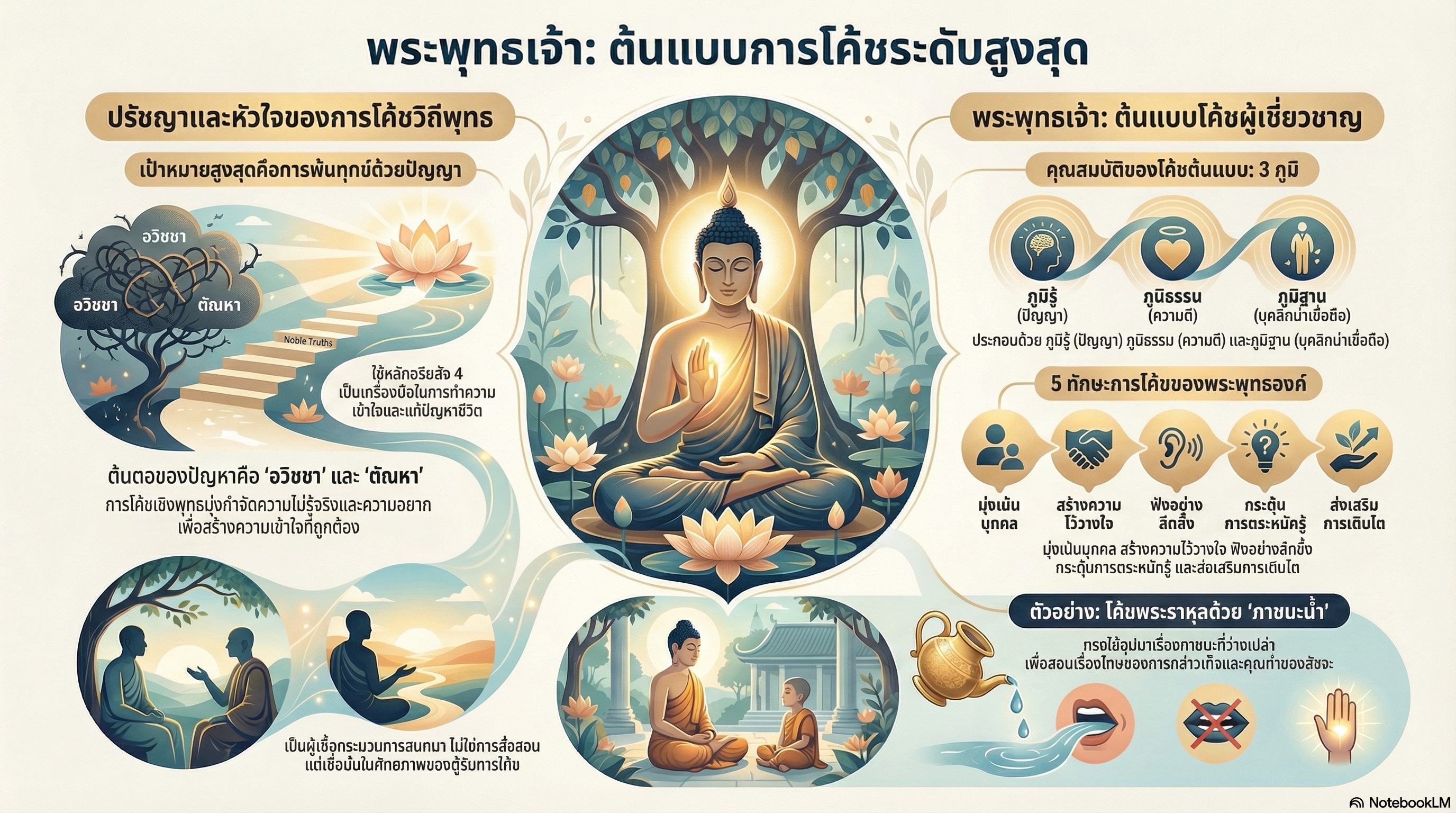
• Objective: To demonstrate that the principles, philosophy, and processes of professional coaching are systematically embedded in the Buddhist scriptures, with the Buddha serving as the ultimate role model for "Mastery in Coaching".
• Definition of Buddhist Coaching: A collaborative process between a Kalayanamitra (virtuous friend/Coach) and a Coachee to stimulate thinking and action toward "Right View" (Samma-ditthi), focusing on unlocking internal potential to transcend suffering.
• Philosophy and Qualities: Buddhist coaching is rooted in the Four Noble Truths to eliminate ignorance. A coach must possess three core attributes: Wisdom (Phu-mi-ru), Purity/Ethics (Phu-mi-tham), and Compassion/Stature (Phu-mi-than).
• Methods and Tools: The Buddha employed deep listening, powerful questioning, metaphors, and visual aids to stimulate self-awareness. Examples include:
◦ Phra Rahula: Using a "mirror" and "water vessel" as metaphors for self-reflection and truthfulness.
◦ Phra Culapanthaka: Utilizing a "white cloth" as a tactile tool to facilitate insight and enlightenment.
• Outcomes: The Buddha’s coaching emphasizes the "Whole Person," aiming for internal growth and transforming individuals into agents of change who foster societal peace
Tongmun, P. W. (2024). The Buddha: A Role Model for Mastery in Coaching. Journal of Institute of Trainer Monk Development, 7(3), 636-651. retrived from https://so06.tci-thaijo.org/index.php/tmd/article/view/271285
.........
"พระพุทธเจ้า: ต้นแบบการโค้ชระดับสูงสุด" (The Buddha: A Role Model for Mastery in Coaching)
โดย พระวุทธ สุเมโธ (ทองมั่น) มีรายละเอียดดังนี้
สรุปเนื้อหาสำคัญ (ภาษาไทย)
• วัตถุประสงค์: เพื่อแสดงให้เห็นว่าหลักการ ปรัชญา และกระบวนการโค้ชระดับสากล มีปรากฏอยู่แล้วอย่างเป็นระบบในพระไตรปิฎก โดยมีพระพุทธเจ้าทรงเป็นต้นแบบของ "Master Coach"
• นิยามการโค้ชเชิงพุทธ: คือกระบวนการชวนคิดชวนทำผ่านความเป็น กัลยาณมิตร เพื่อให้โค้ชชี่ (ผู้รับบริการ) บรรลุเป้าหมายตามแนวทางสัมมาทิฐิ โดยเน้นการดึงศักยภาพภายในเพื่อพ้นจากความทุกข์และพบความสุขที่แท้จริง
• ปรัชญาและคุณสมบัติ: การโค้ชเชิงพุทธตั้งอยู่บนหลัก อริยสัจ 4 เพื่อขจัดอวิชชา (ความไม่รู้) โดยโค้ชต้องประกอบด้วยคุณสมบัติ 3 ประการคือ ภูมิรู้ (ปัญญา), ภูมิธรรม (ความบริสุทธิ์), และ ภูมิฐาน (ความเมตตากรุณาและบุคลิกภาพที่ดี)
• วิธีการและเครื่องมือ: ทรงใช้การฟังอย่างลึกซึ้ง (Deep Listening), การตั้งคำถามทรงพลัง, การอุปมาเปรียบเทียบ และการใช้อุปกรณ์เพื่อกระตุ้นความตระหนักรู้ ตัวอย่างเช่น:
◦ กรณีพระราหุล: ทรงใช้ "กระจก" และ "ภาชนะใส่น้ำ" เป็นอุปมาเพื่อสอนเรื่องการพิจารณาตนเองและความสัตย์
◦ กรณีพระจูฬปันถก: ทรงใช้ "ผ้าสะอาด" เป็นเครื่องมือช่วยในการพิจารณาจนบรรลุธรรม
• ผลลัพธ์: การโค้ชของพระพุทธเจ้ามุ่งเน้นที่บุคคลเป็นสำคัญ (Whole Person) เพื่อให้เกิดการเติบโตจากภายในและพัฒนาตนเองจนกลายเป็นผู้นำการเปลี่ยนแปลงที่สร้างสันติสุขให้แก่สังคม
พระวุทธ สุเมโธ (ทองมั่น). (2566). พระพุทธเจ้า: ต้นแบบการโค้ชระดับสูงสุด. วารสารสถาบันพัฒนาพระวิทยากร. 7(3), 636-651. เข้าถึงได้จาก https://so06.tci-thaijo.org/index.php/tmd/article/view/271285
 Phra Woot Sumedho (Tongmun) Thai Theravada Buddhist Monk promoting self, social, spiritual, and sustainability awareness. - พระภิกษุ
Since:
Update:
Update:
Read : 728 times
